Overview
- Hericenones are species-specific bioactive compounds found in Lion's Mane fruiting bodies.
- Bioshroom spent over a year establishing ISO 17025-accredited Hericenone testing.
- Testing revealed a 10-fold difference in Hericenone content between Lion's Mane genetics.
- The highest-performing strain exceeded 1.2% Hericenones C+D.
- Species-specific bioactive testing offers greater transparency than relying solely on mushroom species names.
Due to the growing importance of species-specific bioactives, Bioshroom began investigating the testing of Hericenones in its Lion's Mane fruiting body ingredients.
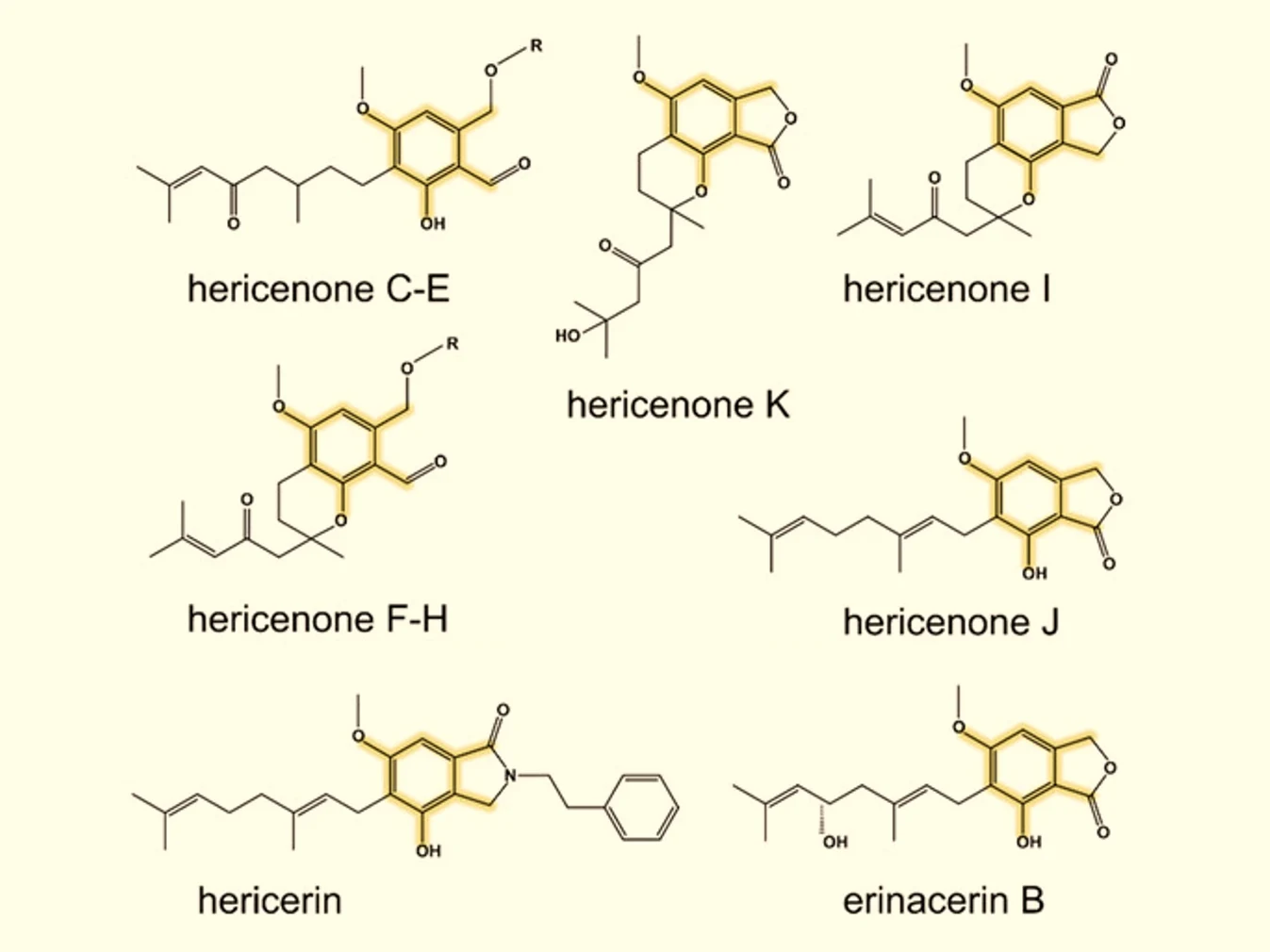
Hericenones are species-specific aromatic compounds found in the fruiting bodies of Lion's Mane (Hericium erinaceus). Unlike beta-glucans, which occur in many mushroom species, Hericenones are largely unique to Lion's Mane and are increasingly being used as markers of ingredient quality and authenticity.
The process was not straightforward. It took almost a year to get the capability online, including sourcing reference standards, developing analytical methods, and validating the testing process. A key requirement for us was finding a laboratory accredited to ISO 17025, ensuring analytical consistency and confidence in the results from batch to batch.
It was only in September 2026 that we finally got this right. We've partnered with a great lab, and the testing capability is now properly online.
Hericenone results across five different Lion's Mane strains
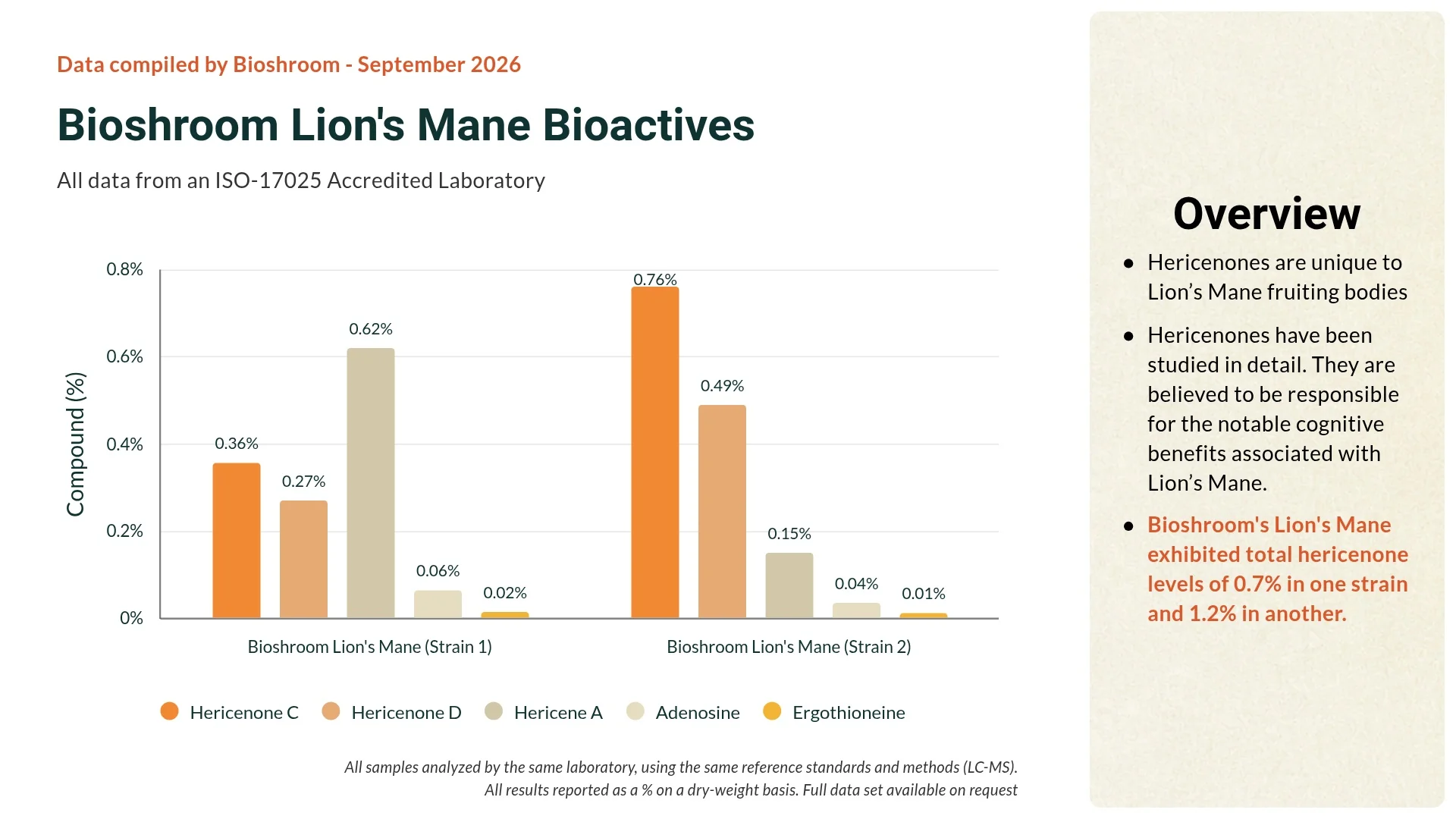
Using this testing platform, we evaluated multiple Bioshroom Lion's Mane products derived from different strains. The results showed substantial differences between genetics – for instance, there was a 10-fold difference in hericenone content between two sets of genetics, grown in similar conditions on a similar substrate. This reinforced our belief that functional mushrooms should be judged by measurable bioactive content.
One strain was almost entirely devoid of hericenones, whilse two strains showed very high levels of hericenones. One consistently delivered 0.7% Hericenones C+D, while another exceeded 1.2% Hericenones C+D, highlighting the significant variation that can exist between different genetic lines of Lion's Mane.
Why Test Lion's Mane for Hericenones?
The functional mushroom industry is maturing. As the market evolves, consumers and brands are becoming increasingly discerning about ingredient quality and authenticity. Species-specific bioactive testing provides brands with greater confidence in the ingredients they source and enables more informed formulation and purchasing decisions.
Put simply, we're tired of seeing low-quality mushroom products sold on the basis of marketing claims rather than measurable data. Our view is that functional mushrooms should be judged by what they contain, not simply by what they are called.
Testing for species-specific bioactives is an important step toward raising standards across the industry, improving transparency, and helping brands differentiate genuinely high-quality ingredients from generic commodity products.
Frequently Asked Questions
What are Hericenones?
Hericenones are naturally occurring bioactive compounds found exclusively in the fruiting body of Lion's Mane (Hericium erinaceus). They are considered species-specific compounds and are increasingly being used as markers of Lion's Mane ingredient quality.
Why does Bioshroom test for Hericenones?
We believe functional mushrooms should be evaluated based on measurable bioactive content rather than beta glucans, polysaccharides, or extract rations. Hericenone testing allows us to better understand strain performance, support transparency, and provide customers with greater confidence in their ingredients.
Why did it take so long to develop the testing capability?
Establishing a reliable testing method required sourcing reference standards, developing analytical methods, validating the process, and partnering with an ISO 17025-accredited laboratory capable of delivering consistent and repeatable results.
What did Bioshroom discover when testing different Lion’s Mane strains?
We found significant variation between Lion's Mane strains. One strain showed very low Hericenone levels, while others performed exceptionally well. Two strains emerged as clear standouts, delivering approximately 0.7% and more than 1.2% Hericenones C+D respectively.
Does a higher Hericenone level mean a better product?
Higher Hericenone levels indicate a greater concentration of one important class of Lion's Mane bioactives. However, quality should be assessed using multiple factors, including beta-glucans, cultivation methods, processing standards, consistency, and third-party testing.
Why is ISO 17025 accreditation important?
ISO 17025 accreditation demonstrates that a laboratory operates according to internationally recognised standards for testing and calibration. This helps ensure that results are accurate, repeatable, and consistent from batch to batch.
Are all Lion's Mane products the same?
No. Our testing showed considerable variation between different Lion's Mane strains. Genetics, cultivation methods, and processing can all influence the final bioactive profile of an ingredient.
What does this mean for brands using Lion's Mane ingredients?
Species-specific bioactive testing enables brands to make more informed sourcing decisions, improve transparency, and better understand the ingredients they use in finished products.
Will Hericenone testing become more common in the future?
We believe so. As the functional mushroom industry continues to mature, demand for transparency, standardisation, and measurable bioactive content is likely to increase, making Hericenone testing an increasingly important quality marker for Lion's Mane ingredients.