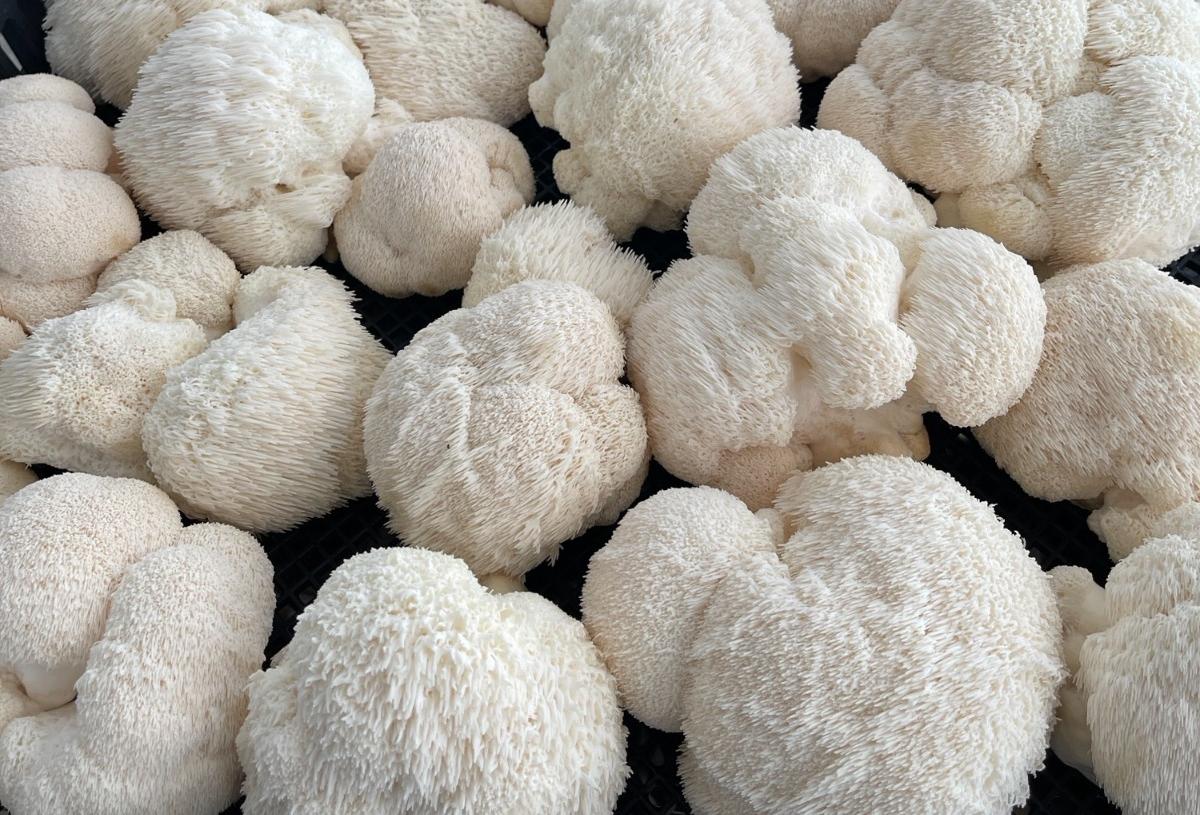
Research into Lion's Mane and cognitive health spans more than two decades. Early studies in older adults experiencing cognitive decline reported improvements in daily functioning, while later clinical trials found positive effects on measures of cognitive performance in adults with mild cognitive impairment.
Lion's Mane (Hericium erinaceus) is one of the most researched functional mushrooms for cognitive health. Interest in its potential benefits is largely driven by compounds known as hericenones and erinacines, which have been studied for their role in supporting nerve growth factor (NGF), a protein involved in the growth and maintenance of nerve cells.
Human studies suggest that Lion's Mane may help support cognitive function when taken consistently over time, particularly in older adults experiencing age-related cognitive decline.
The First Human Research
One of the earliest human studies investigating Lion's Mane and cognitive decline was conducted in Japan in 2001.
In this small pilot study, seven older adults with dementia consumed 5 g of dried Lion's Mane fruiting body daily, prepared as a soup, over a six-month period.
Researchers assessed participants' ability to perform everyday activities such as eating, dressing, bathing, walking, and personal care. At the end of the study, six of the seven participants showed improvements in their ability to carry out these daily tasks.
The researchers also reported that three participants who had previously been bedridden were able to get out of bed for meals and engage more actively with those around them.
Although the study was exploratory and involved a small number of participants, it provided an early indication that Lion's Mane may have a role in supporting quality of life and functional independence in older adults experiencing cognitive decline (Kasahara, Kaneko & Shimizu, 2001).
Clinical Studies in Mild Cognitive Impairment
Following the early Japanese pilot study, several larger clinical trials investigated Lion's Mane in adults experiencing age-related cognitive decline.
One of the most widely cited studies was conducted by Mori and colleagues in 2009. In this double-blind, placebo-controlled trial, adults with mild cognitive impairment consumed 3.2 g of Lion's Mane fruiting body daily for 16 weeks.
Participants taking Lion's Mane showed progressive improvements in cognitive performance throughout the study period, with significant benefits observed after 8, 12, and 16 weeks. When supplementation was discontinued, cognitive scores began to decline, suggesting that ongoing use may be important for maintaining any observed benefits.
Research: pubmed.ncbi.nlm.nih.gov/18844328
Further Evidence in Healthy Older Adults
A later study by Saitsu and colleagues (2019) reported similar findings in healthy adults over the age of 50.
Participants receiving 3.2 g of Lion's Mane daily demonstrated improvements in standard measures of cognitive function compared with the control group. The study provided further support for Lion's Mane as a potential ingredient for healthy cognitive ageing.
The findings from both studies suggest that Lion's Mane is not a fast-acting stimulant, but rather a functional mushroom that may support cognitive health through regular, long-term use.
Research: pubmed.ncbi.nlm.nih.gov/31413233
Why Researchers Are Interested in Lion's Mane
Lion's Mane is unique among functional mushrooms because it contains compounds that have been shown in laboratory and animal studies to stimulate the production of nerve growth factor (NGF).
NGF plays an important role in the development, maintenance, and repair of neurons. This has led researchers to investigate Lion's Mane as a potential area of interest for cognition, memory, healthy ageing, and neurodegenerative conditions.
While the early human research is encouraging, scientists continue to emphasise the need for larger, long-term clinical studies before definitive conclusions can be drawn.
The Bottom Line
More than two decades of research have positioned Lion's Mane as one of the most studied functional mushrooms for cognitive health.
Early pilot studies reported improvements in daily functioning among older adults with dementia, while subsequent clinical trials found benefits in measures of cognitive performance among adults with mild cognitive impairment and healthy older individuals.
Although research is ongoing, the evidence suggests that consistent supplementation with high-quality Lion's Mane fruiting body products may help support cognitive health as part of a broader healthy ageing strategy.
Research Articles
- Kasahara, K., Kaneko, N., & Shimizu, K. (2001). Effects of Hericium erinaceum on aged patients with impairment. Gunma Medical Supplement, 76, 77–78.
- Mori K, Inatomi S, Ouchi K, Azumi Y, Tuchida T. (2009). Improving effects of the mushroom Yamabushitake (Hericium erinaceus) on mild cognitive impairment: a double-blind placebo-controlled clinical trial.
- Saitsu Y, Nishide A, Kikushima K, Shimizu K, Ohnuki K. (2019). Improvement of cognitive functions by oral intake of Hericium erinaceus.